Home > Manitoba Emergency Services College > Public Fire Paramedic Program
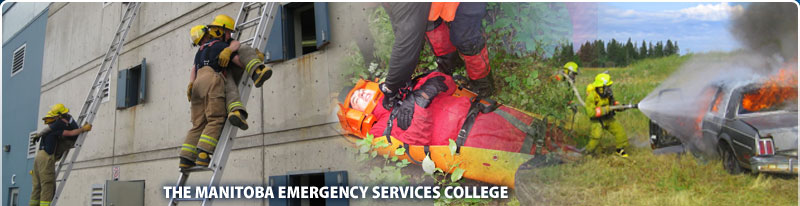
The Public Fire Paramedic Program is a 10 month program which takes members of the public from minimal knowledge of fire fighting and paramedic work to having a comprehensive knowledge of what‘s required to have a successful career as a fire fighter or paramedic.
The Manitoba Emergency Services College has one intake of 32 students each year. The expectations of our students are high and with the assistance of experienced staff and a desire to succeed, our students will successfully complete the PFPP Diploma training. The size of the class allows instructors the opportunity to really know and understand the students and their needs.
The training within the PFPP at MESC is intense and requires significant commitment from those attending. The classes run Monday to Friday from 08:30 – 16:30 with work required outside of regular class time to enable the student to be successful. The 10 month time period is full of didactic information and hands on skill requisition. By the time our students leave the College they are both confident and competent in the skills and information they have acquired. A goal of the MESC is to ensure our students will be positive contributors to a service upon entering the workforce as either a paramedic or fire fighter; which is not possible to attain in 2 weeks of training.
The PFPP Diploma training includes:
* IFSAC International Fire Service Accreditation Congress
** PAC Paramedic Association of Canada
*** CMA Canadian Medical Association
****ProBoard International Accreditation for Fire Service Organizations
Fire Fighting Level I
(meets NFPA 1001 - 2008 & accredited with IFSAC* & ProBoard**** )
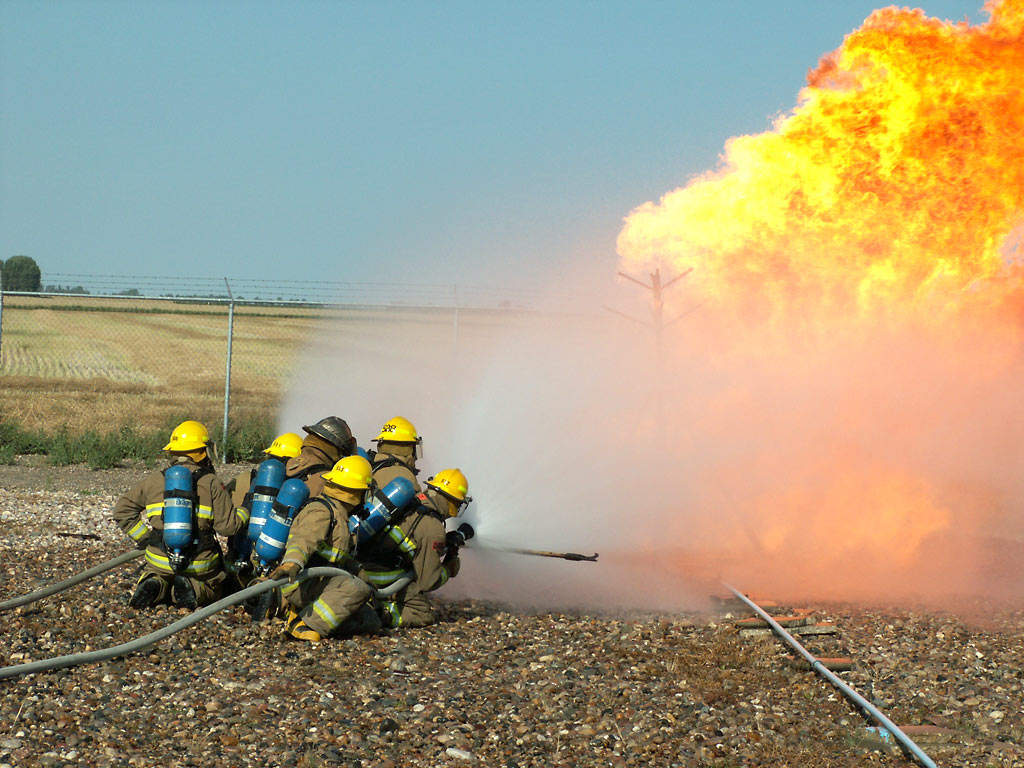
This course is the first level in the Fire Fighting Program. It is designed to provide the skills necessary to effectively perform the functions of a fire fighter and to upgrade and re-align those skills with the changing times. By the end of this course students should be able to; apply departments general operating guidelines, rules and regulations in any situations, effectively use fire department communications, perform fire ground operations necessary to ensure life safety, fire control and property conservation and, perform the activities of prevention, preparedness and maintenance to effectively reduce the loss of life and property due to fire.
Fire Fighting Level II
(meets NFPA 1001 - 2008 & accredited with IFSAC* & ProBoard****)
This course is the second level in the Fire Fighting Program. It is designed to provide the skills necessary to perform the functions of a fire fighter. This includes suppression technology, and typical andspecial fire fighting abilities. By the end of this course candidates should be able to assume command within an incident management system, communicate effectively using both department communication systems and incident reporting systems, perform fire ground operations necessary to ensure life safety, fire control and property conservation, perform rescue operation activities related to accessing and disentangling victims from motor vehicle accidents and helping special rescue teams and perform activities related to reducing the loss of life and property due to fire through hazard identification, inspection and response readiness.
Primary Care Paramedic
(meets PAC** competencies & accredited with CMA***)
The Primary Care Paramedic program prepares the individual for work in the prehospital field. The course consists of both theory and a significant amount of hands on time with equipment to allow our students to become comfortable prior to starting their clinical and ambulance practicum time.
An added bonus for our students is they receive certification in a recognized trauma course from International Trauma Life Support (ITLS). ITLS is an international organization with Chapters throughout the world. This course is required by many jurisdictions prior to being eligible for registration.
Clinical rotations are completed in the emergency departments in hospitals within major centres in Manitoba. All ambulance practicums are completed with our partnering organization – Winnipeg Fire Paramedic Service. Our students spend a minimum of 18 shifts on the ambulance and average approximately 75 calls during that time.
Driver Operator - Pumper
(meets NFPA 1002 -2009 & accredited with IFSAC* & ProBoard**** )
This course consists of 3 components which must be successfully completed to challenge the exam process. The components are: Emergency Vehicle Driving Skills, Pump Operations, and Fire Service Hydraulics.
Emergency Driving Skills: This course is designed for emergency service personnel who are or wish to become emergency vehicle operators. Students will learn the psychological and physiological aspects of driving, perception and reaction judgement, pre-ignition procedures, vehicle dynamics, the attitudes and habits of the driver, proper steering, braking and handling control, the risks associated with speed and the techniques to effectively move the emergency vehicle properly while reducing operating speed.
Emphasis for this program will be on the practical development of these skills using a driving track. Students will operate the emergency vehicle through a serpentine, alley dock, perception and reaction skill test, straight line and curves and will also learn the proper braking technique.
Pump Operations: This course is designed for fire service personnel to develop skills in the operation of fire pumpers. Students will learn pressure regulating devices, the operating principles of drive lines, positive displacement and centrifugal fire pumps, foam systems, gauges and controls, pumping from a hydrant, relay pumping, basic friction loss calculations to determine minimum pump pressure, pump testing gauges controls and basic maintenance checks.
Fire Service Hydraulics:
Students will learn:
Emphasis will be on the theoretical hydraulic applications. Students will learn how to prepare quick reference material for aid on the fire ground. This course is taught using the METRIC system only.
Surface Water Rescue Technician
(meets NFPA 1006 - 2008 & accredited with IFSAC* & ProBoard****)
This course provides emergency response personnel who will be required to respond to and work in the open surface water environment including river (low head dams) and flood applications (not swift water). This course is designed around the use of full flotation survival emersion suits and other specialized water rescue equipment.
The candidate will learn preplanning an incident, incident management, specialized equipment, boat operations (zodiac), shore based rescue, boat based rescue, patient management in the water environment, specialized patient packaging, survival techniques for the rescuer, consideration for night operations, incident termination and equipment maintenance.
Hazardous Materials Awareness
(meets NFPA 472 - 2008 & accredited with IFSAC * & ProBoard****)
Emergency Response Team members at the awareness level are those persons who, in the course of their normal duties, could be the first on the scene of a hazardous materials emergency response. This course stresses how responders can protect themselves, call for trained personnel, and secure the area. Information is also provided on Transport Canada placarding, utilizing various resources like CANUTEC, and use of the Emergency Response Guidebook.
Hazardous Materials – Operations
(meets NFPA 472 – 2008 & accredited with IFSAC* & ProBoard****)
Emergency Response Team members at the Operations level are those persons who respond to releases or potential releases of hazardous materials, for the purpose of protecting nearby persons, property and the environment from the effects of the product. Emergency Responders at the operations level are expected to respond in a defensive fashion to control the release from a safe distance and keep it from spreading. This course teaches skills needed for detecting the presence of hazardous substances, consulting references for additional information, and implementing work practices that will minimize the possibility of contamination.
Fire Inspector Level 1
(meets NFPA 1031 - 2009 & accredited with IFSAC* & ProBoard****)
This course is designed to teach students to apply the concepts and skills of a fire inspector. Students learn about fire safety, codes and standards, and fire protection systems and how to think their way through fire prevention inspections.
Incident Command System 100
This introductory course will cover the basics of the Incident Command model of emergency management. All members of Emergency Services should take this course so they are aware of how the Incident Command model works.
Fire and Life Safety Educator
(meets NFPA 1035 - 2005 & accredited with IFSAC* & ProBoard****)
This course is designed to provide the skills necessary to deliver and co-ordinate Fire and Life Safety Education at various levels within a community.
This course will outline the curriculum development process and give general guidelines for planning successful presentations. It will familiarize you with information on what motivates people to learn and how people learn differently. Other topics will include learning characteristics of different age groups, educational materials selection and program evaluation, working co-operatively with other community agencies, finding and using resources and working with the media.
Rescue Practices
This course is designed to prepare emergency services personnel with the skills to enter into other rescue specialties. The candidate will be able to operate under a recognized command structure, perform basic rescue skills, identify specific equipment and learn proper maintenance procedures. This course will teach the candidate the basic skills that can be applied to many rescue situations.
Vehicle Extrication
This seminar is designed to teach the skills of how to approach and size-up a motor vehicle accident and the correct procedures for getting into, stabilizing and disentangling vehicles. The procedures for packaging and removing victims are also demonstrated. Practical skills are taught by having the participants work on actual vehicles and perform the necessary skills.
Physical Training Program
Physical health and fitness is an important part of the Fire and Emergency Services profession. The Manitoba Emergency Services College (MESC) incorporates a Physical Training (PT) program in the Public Fire Paramedic Program (PFPP) to assist our students in maintaining a high standard of physical fitness in order to assist them in the physical demands of the day – to – day operations of the emergency services field. The PT program is lead by MESC instructors and consists of two mandatory, one hour workout sessions each week. These sessions include training which incorporates various aspects of physical fitness such as interval training, aerobic training, muscular strength, aquatics and organized team events.
CAREER OPPORTUNITIES
Graduates of this program may find employment in many emergency services related areas including but not limited to federal, provincial and municipal emergency services, areas requiring industrial and institutional safety and response specialists, and equipment sales dealing with fire and medical.